Applications are open for FAST-SF 2027, the Focus Area Science Technology Summer Fellowship. The three national science academies expect to offer about 200 fellowships to students and teachers at institutions in designated parts of India. The deadline to apply online is 30 November 2026. A student studying in Bihar, for example, can apply for a project with a scientist elsewhere in India. Where you currently study or teach determines whether you meet the regional condition. The research placement itself can take place anywhere in the country.
Which states and territories qualify for FAST-SF 2027?
The North-East list covers Arunachal Pradesh, Assam, Manipur, Meghalaya, Mizoram, Nagaland, Sikkim and Tripura. The announcement also includes Andaman, Bihar, Chhattisgarh, Himachal Pradesh, Jharkhand, Lakshadweep, Madhya Pradesh, Jammu and Kashmir, Ladakh and Uttarakhand. Look up the location of the college or university where you are enrolled or employed. A permanent address in one of these places by itself does not establish the institutional connection described in the announcement.
This distinction matters for students who have moved across state lines. Consider two classmates from Gaya who now study at different universities. The one attending a university in Bihar meets the location test. The one studying in Delhi should look at the separate nationwide Science Academies Summer Research Fellowship. For someone enrolled at a central university with multiple campuses, it makes sense to give the actual campus and department in correspondence with the programme coordinator.
Which degree years are eligible?
For a conventional BSc or BS, the eligible year is the second. For a BSc (Research), it is the third. Second-year BStat and BMath students can also apply. In engineering and computer applications, the window covers the second and third years of BE, BTech and BCA. Architecture students have a longer window, from second through fourth year. BPharm and PharmD students can apply in their third or fourth year. Match the title on your academic record to the entry in the instructions before choosing a course on the form.
Most standalone master’s courses listed by the academies have a first-year window. These include MSc, MS, MVSc, MPharm, ME, MTech, MCA, MArch, MStat and MMath. MSc Tech includes the first two years. The instructions separately identify eligible years for five-year integrated courses and named dual degrees. For instance, a third-year BS plus MS student should use the dual-degree entry. Integrated PhD has a specific first- and second-year entry, while the general rules exclude PhD students. If your registration does not clearly fit one description, send the coordinator the exact degree title and year.
 NAAC A++
 NIRF #2 (2025)Jawaharlal Nehru UniversityNew Delhi, DelhiAdmission: CUET UG, CUET PG, NET/JRFEst. 1969View details
 NAAC A++
 NIRF #4 (2025)Jamia Millia IslamiaNew Delhi, DelhiAdmission: CUET UG, CUET PG, NET/JRFEst. 1920 · 239 acresView details
 NAAC A++
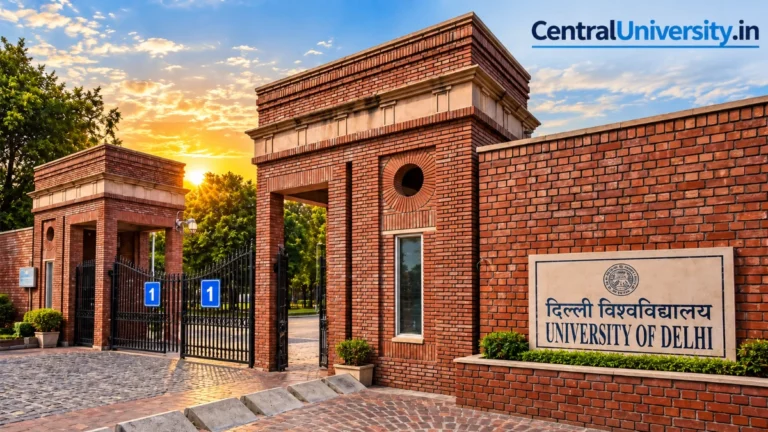
 NIRF #5 (2025)University of DelhiNew Delhi, DelhiAdmission: CUET UG, CUET PG, JEE MainEst. 1922View details

 NIRF #6 (2025)Banaras Hindu UniversityVaranasi, Uttar PradeshAdmission: CUET UG, CUET PG, NET/JRFEst. 1916 · 1300 acresView details
 NAAC A+
 NIRF #10 (2025)Aligarh Muslim UniversityAligarh, Uttar PradeshAdmission: CUET UG, NET/JRF, NEET UGEst. 1920View details
 NAAC A+
 NIRF #18 (2025)University of HyderabadHyderabad, TelanganaAdmission: CUET UG, CUET PG, NET/JRFEst. 1974 · 2000 acresView details
 NAAC A++
 NIRF #37 (2025)Babasaheb Bhimrao Ambedkar UniversityLucknow, Uttar PradeshAdmission: CUET UG, CUET PG, NET/JRFEst. 1996View details
 NAAC A+
 NIRF #77 (2025)Central University of PunjabBathinda, PunjabAdmission: CUET UG, CUET PG, NET/JRFEst. 2009 · 500 acresView details
 NAAC A+
 NIRF #79 (2025)Tezpur UniversityTezpur, AssamAdmission: CUET UG, CUET PG, NET/JRFEst. 1994 · 262 acresView details
 NAAC A
 NIRF #82 (2025)Mizoram UniversityAizawl, MizoramAdmission: CUET UG, CUET PG, NET/JRFEst. 2000View details
What the 65 per cent condition means
Student applicants need an average of at least 65 per cent in core subjects across the completed stages specified by the academies, starting with Class X. Languages are excluded. Review the individual subject entries before relying on an overall percentage printed on a certificate. If your university reports only grades, keep its grading or conversion information nearby. An explanation from the institution is more useful than guessing a conversion factor when the online form asks for a percentage.
Teachers working in the eligible regions can also apply. The student marks threshold does not apply to them, although the academic records are still required. A teacher who has publications should prepare the details for upload. Selected teachers also need permission for their absence from the principal or head of department. Discuss the likely duration with the department before applying, particularly if laboratory classes or examinations could overlap with a summer placement.
Plan a research question that fits two months
The academies ask for roughly 150 to 250 words about a specific interest and what the applicant hopes to learn. Start with an observation from your own work. For example, a geography student might have noticed two campus temperature sensors giving different readings at midday. An achievable question would be how shade and sensor placement affect those readings. The student could explain what measurements they have already taken, what comparison they want to try and where they need a guide’s expertise. This is an illustration of scale, not a prescribed topic.
A useful editing exercise is to underline every sentence that could apply equally well to a student in another discipline. Replace one with a detail about your data, apparatus or theoretical problem. Then look at the scientists who have agreed to supervise projects. If you cannot explain the connection between your question and a guide’s work in a sentence, narrow the question or explore another guide. Keep the final write-up in your own words and follow the portal’s restrictions on special characters.
How to submit a complete application
Open the official FAST-SF announcement and follow its application instructions. Prepare readable JPEG scans of mark sheets from Class X through the last examination, each within 700 KB. Check that names, subject marks and page edges remain visible after compression. Keep the scans in chronological order so you can check the uploaded files against the education entries. The initial application is online. Paper copies of the form and marksheets are unnecessary.
Student applicants must supply contact details for a current teacher familiar with their work. The Academy requests the recommendation directly. Confirm the spelling of the teacher’s email address and let them know which topic you chose. Review every mandatory field before submitting. Multiple submissions can disqualify an applicant, so save the registration number after submission and quote it when asking about your application. For programme-specific questions, the published contact is fastsf@ias.ac.in.
Funding, travel and the selection timeline
Successful applicants work with their assigned guide for two months during 2027, preferably in summer. The announcement provides for eligible return train fare and a monthly fellowship towards living expenses at the place of work. It gives no fixed rupee figure in the announcement. If the placement requires travel from an island or a remote campus, ask about the eligible itinerary before purchasing a ticket. Budgeting for the stay is easier once the host location and dates are confirmed.
Selection information and the guide’s concurrence are expected around March or April 2027. Keep access to the email account used on the application after the November deadline, especially if it is a university account due to expire. Once an offer arrives, compare the proposed period with your home institution’s examination timetable and discuss the dates with the guide. These details matter for a two-month placement away from campus even when the research topic is already settled.
FAST-SF 2027 official announcement · Read the eligibility rules and proceed to the application