The Viksit Bharat Shiksha Adhishthan (VBSA) Bill, 2025 would bring almost all of higher education under one regulator. The University Grants Commission (UGC), the All India Council for Technical Education (AICTE) and the National Council for Teacher Education (NCTE) would be dissolved and their Acts repealed once the new bodies are in place. Medical, legal and some other professional streams stay outside it. The Bill is still with a Joint Parliamentary Committee. As of 22 November 2026, the committee has not presented its report, so nothing in the Bill is law yet and the UGC, AICTE and NCTE continue to work as before.
VBSA Bill at a glance
| Point | Detail |
|---|---|
| Full name | The Viksit Bharat Shiksha Adhishthan Bill, 2025 (Bill No. 194 of 2025) |
| Introduced | Lok Sabha, 15 December 2025 |
| Referred to | Joint Parliamentary Committee, 16 December 2025 |
| Committee | 31 members (21 from Lok Sabha, 10 from Rajya Sabha), chaired by D Purandeswari |
| Acts to be repealed | UGC Act, 1956; AICTE Act, 1987; NCTE Act, 1993 |
| New structure | One Commission, the Viksit Bharat Shiksha Adhishthan, with three councils for regulation, standards and accreditation |
| Funding | Not with the regulator; grants through the Ministry of Education |
| Status | Committee report awaited; not passed by either House |
What the Bill sets up
At the top is the Commission, the Viksit Bharat Shiksha Adhishthan. It has a Chairperson, whose post is honorary, and up to 12 members: the presidents of the three councils, the Union higher education secretary, five eminent experts and two eminent academicians from state institutions. The central government selects the Chairperson. Below the Commission are three councils, each with 14 members headed by a president:
- Viksit Bharat Shiksha Viniyaman Parishad (Regulatory Council): sets and enforces the minimum standards for setting up institutions, deals with grievances, authorises institutions to award degrees with central approval, and can impose penalties.
- Viksit Bharat Shiksha Manak Parishad (Standards Council): frames learning outcomes for programmes and the minimum academic standards for institutions.
- Viksit Bharat Shiksha Gunvatta Parishad (Accreditation Council): builds the accreditation framework, accredits institutions and empanels accrediting agencies. It would take over the work NAAC does today.
The Regulatory and Standards Councils each have one state government nominee, by rotation for one year. The Accreditation Council has none.
 NAAC A++
 NIRF #2 (2025)Jawaharlal Nehru UniversityNew Delhi, DelhiAdmission: CUET UG, CUET PG, NET/JRFEst. 1969View details
 NAAC A++
 NIRF #4 (2025)Jamia Millia IslamiaNew Delhi, DelhiAdmission: CUET UG, CUET PG, NET/JRFEst. 1920 · 239 acresView details
 NAAC A++
 NIRF #5 (2025)University of DelhiNew Delhi, DelhiAdmission: CUET UG, CUET PG, JEE MainEst. 1922View details
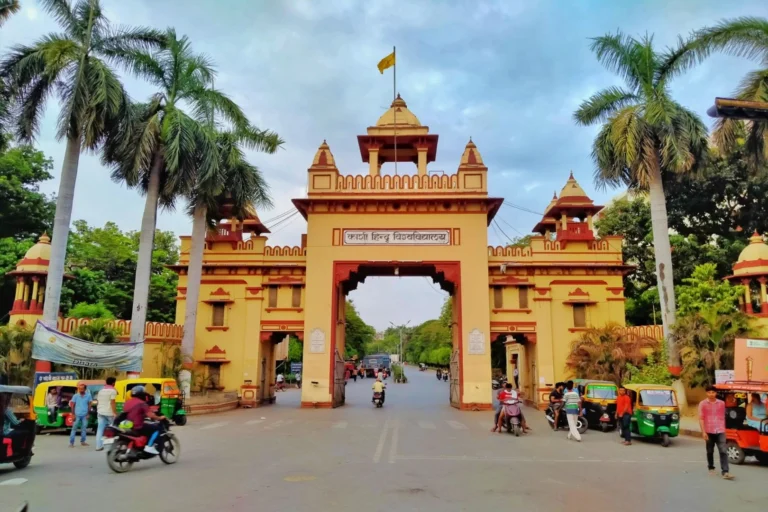
 NIRF #6 (2025)Banaras Hindu UniversityVaranasi, Uttar PradeshAdmission: CUET UG, CUET PG, NET/JRFEst. 1916 · 1300 acresView details
 NAAC A+
 NIRF #10 (2025)Aligarh Muslim UniversityAligarh, Uttar PradeshAdmission: CUET UG, NET/JRF, NEET UGEst. 1920View details
 NAAC A+
 NIRF #18 (2025)University of HyderabadHyderabad, TelanganaAdmission: CUET UG, CUET PG, NET/JRFEst. 1974 · 2000 acresView details
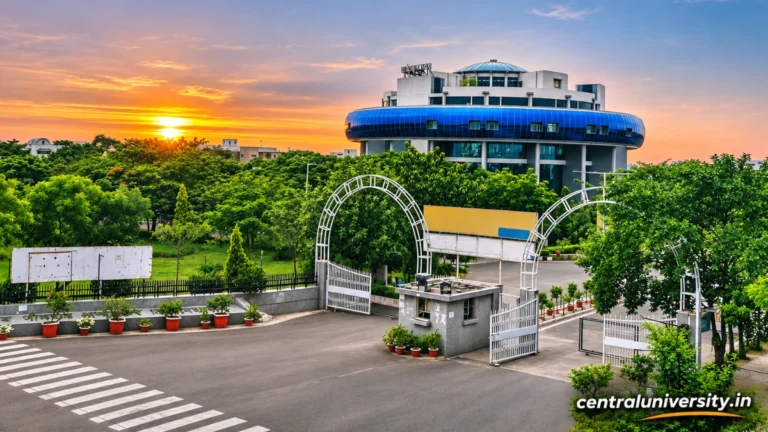 NAAC A++
 NIRF #37 (2025)Babasaheb Bhimrao Ambedkar UniversityLucknow, Uttar PradeshAdmission: CUET UG, CUET PG, NET/JRFEst. 1996View details
 NAAC A+
 NIRF #77 (2025)Central University of PunjabBathinda, PunjabAdmission: CUET UG, CUET PG, NET/JRFEst. 2009 · 500 acresView details
 NAAC A+
 NIRF #79 (2025)Tezpur UniversityTezpur, AssamAdmission: CUET UG, CUET PG, NET/JRFEst. 1994 · 262 acresView details
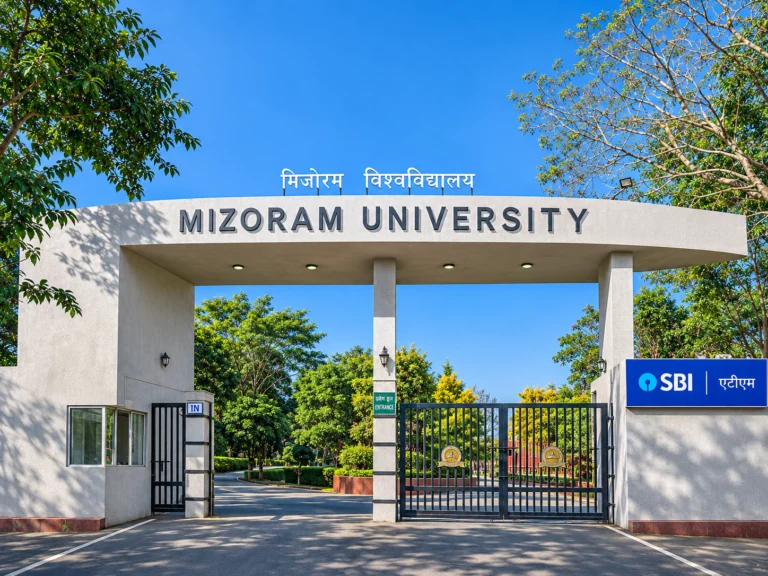 NAAC A
 NIRF #82 (2025)Mizoram UniversityAizawl, MizoramAdmission: CUET UG, CUET PG, NET/JRFEst. 2000View details
Which institutions it covers
The Bill applies to Central and State universities, deemed universities, affiliated colleges, institutions of national importance under the Education Ministry such as the IITs and IIMs, institutions of eminence, open and distance learning institutions recognised by the UGC, and colleges now under the AICTE, the NCTE and the Architects Act. The Council of Architecture keeps its power over professional practice.
Programmes regulated by the National Medical Commission, the Bar Council of India, the Pharmacy Council of India, the Veterinary Council of India, the Rehabilitation Council of India, the dental, nursing and allied health commissions and the three AYUSH commissions stay outside it. A university can still run such programmes if it meets the rules of the body concerned.
Funding moves to the Ministry
Unlike the UGC, the new Commission would give no grants. The Bill’s financial memorandum says grants to centrally funded institutions would be released by the Ministry of Education. For Central Universities this means the money would come from the Ministry, while the Commission would only regulate.
Degrees, new campuses and penalties
- Degrees can be awarded only by a university set up under a central or state law, a deemed university, an institution empowered by a central Act, or an institution the Regulatory Council authorises with central approval.
- Universities would need the Regulatory Council’s approval to open constituent colleges, off-campus centres or more campuses. PRS Legislative Research notes that this could take back a freedom more than 60 universities gained under the UGC’s graded autonomy rules of 2018.
- Penalties are graded by the number of violations: up to Rs. 75 lakh for repeated contravention of the Act, and at least Rs. 2 crore, with possible closure, for setting up a university or institution without approval.
- Appeals against the Commission or a council go to the central government, and its decision is binding.
- The central government can supersede the Commission and the councils in some situations.
Existing degrees, rules and staff
The Bill’s transition clauses are written to keep the system running:
- The UGC, AICTE and NCTE keep working until the Commission and the councils are formed. The government can appoint interim heads and members for up to two years.
- Institutions under these bodies continue as if the old Acts had stayed in force, and deemed universities under section 3 of the UGC Act become deemed institutions under the new law.
- Existing standards, rules and regulations remain in force until new ones replace them. This covers the UGC regulations on teacher qualifications, promotions and PhD admission.
- Regular employees of the three bodies move to the new Commission or councils on the same pay, pension and service terms. Pending court cases continue.
Degrees are awarded by universities under their own Acts, not by the UGC, and the Bill applies the General Clauses Act, which protects what was done under a repealed law. A degree already awarded by a recognised university therefore stays valid.
UGC NET, JRF and scholarships
None of the Bill’s clauses deals with the National Eligibility Test, the Junior Research Fellowship or scholarships. NET is held by the NTA for the UGC, and its use for Assistant Professor posts and PhD admission rests on UGC regulations, which the Bill keeps in force until the new councils frame their own. The December 2026 NET goes ahead as scheduled, from 14 to 18 December and on 21 December.
The committee’s draft report, circulated to its members in July 2026, asked the Ministry to add a clause that ongoing UGC grant commitments continue, to notify a successor grant mechanism early so that Central Universities and state institutions under PM-USHA face no disruption, and to make sure there is no break in JRF, SRF and other scholarships. These are recommendations. They enter the law only if the government accepts them.
What the parliamentary committee has proposed
The draft report largely backs the Bill but asks for changes. Its main points, as reported in July 2026:
- Exempting institutions of national importance such as the IITs is neither desirable nor necessary. They should stay under the Commission with their autonomy protected, and be consulted on policies that affect them.
- The deemed university category should be phased out, with existing deemed universities becoming full universities with graded autonomy.
- Serving government officers should be barred from the posts of Chairperson and members, as section 5(2) of the UGC Act does today. Selection should be open and advertised, and should include members from SC, ST, OBC and women.
- Each council should have at least three state government nominees, rotating by zone, with a term of at least three years. State Higher Education Councils should be formally recognised and consulted before major policies.
- The government’s power to supersede the Commission should be reviewed, with objective tests for when it can be used.
- Standards and accreditation should differ by category of institution, with a separate roadmap for hilly, rural and remote institutions.
- Keeping funding with the Department of Higher Education is accepted.
The committee also observed that the Bill may concentrate wide regulatory powers in one central body, which could hurt institutional autonomy.
How far the Bill has moved
| Date | Step |
|---|---|
| 15 December 2025 | Introduced in Lok Sabha |
| 16 December 2025 | Referred to a Joint Parliamentary Committee |
| February 2026 | Committee formed under D Purandeswari; time to report extended to the last week of the Monsoon Session |
| 7 and 8 July 2026 | Clause-by-clause consideration |
| 17 and 20 July 2026 | Meetings to adopt the draft report put off, then cancelled |
| 25 July 2026 | Dharmendra Pradhan, who introduced the Bill, resigns as Education Minister; Pralhad Joshi takes charge of the Ministry |
| 6 August 2026 | Committee seeks more time to finalise its report |
| 25 August and 11 September 2026 | Committee meets again and hears domain experts |
What it means for Central Universities
- Each Central University keeps its own Act, which sets out its Visitor, its authorities and its statutes.
- Grants would come from the Ministry of Education instead of the UGC.
- Rules the UGC issues today, on teacher qualifications, promotions, PhD admission and similar matters, would in time be issued by the new councils.
- Opening an off-campus centre or a new campus would need the Regulatory Council’s approval.
- Accreditation would move from NAAC to the Accreditation Council and the agencies it empanels.
What happens next
- The committee adopts its report and presents it to Parliament.
- The government decides which recommendations to accept and moves amendments.
- Lok Sabha and Rajya Sabha pass the Bill, and the President gives assent.
- The government notifies the dates on which the Commission and councils are formed and the three old Acts are repealed. Until then the UGC, AICTE and NCTE carry on.
Parliament’s Winter Session is expected to begin in the first week of December 2026, but its dates have not been announced. Students need not change any plan for now: CUET, NET, PhD admissions, fellowships and scholarships all run under the present rules.